#341: The Odyssey
Release Date: July 17th, 2026
Format: 70mm (Universal Cinema AMC at CityWalk Hollywood in Universal City, CA)
Written by: Christopher Nolan
Directed by: Christopher Nolan
4 Stars
Christopher Nolan the Auteur has never been my guy, per say. His storytelling preoccupations - morally compromised male protagonists who must endure wrenching sacrifice to save themselves (and sometimes the entire world) - and the dour weight of his film’s tones don’t particularly resonate with me. For example, I was part of the Barbenheimer experiment back in the summer of ‘23, and I enjoyed both movies. Since those initial viewings, I’ve seen Greta Gerwig’s film twice more. As for Oppenheimer, it’s never really occurred to me to watch it again.
I do admire Nolan’s work, though. He’s a sincere and ambitious filmmaker (and maybe a bit of a narcissistic nerd; on some level, even subconsciously, he must see himself in these world-saving protagonists he likes so much).
It’s his sincerity and ambitiousness, along with those auteurist preoccupations of his, that make him a natural choice to adapt one of humanity’s oldest and grandest surviving stories, Homer’s epic poem, The Odyssey.
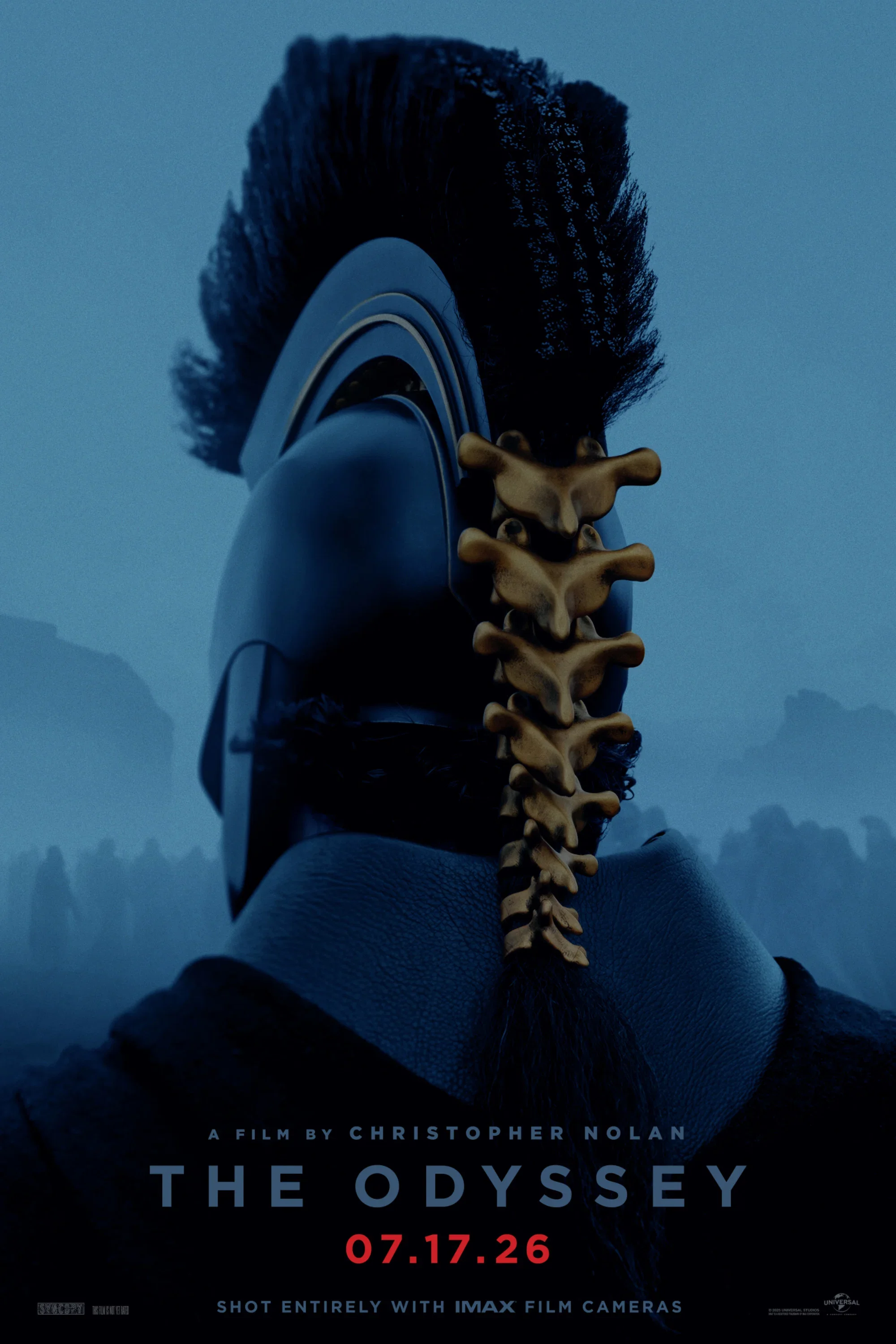
Shot entirely on IMAX cameras using 70mm film, The Odyssey finds Nolan at his most visually and sonically grandiose (and considering the scale of some of the entries in Nolan’s earlier filmography, that’s really saying something). The Odyssey also finds him going old school, relying on in-camera visual effects in place of post-production CGI, and utilizing on-location filming seemingly all around the globe to capture Odysseus’ (Matt Damon) labyrinthian journey home to Ithaca following his heroic exploits in the Trojan War (Nolan filmed in such far reaching places as Morocco, Iceland, Greece, and Western Sahara).
If James Cameron is pushing the technological capabilities of CGI and motion capture with his Avatar films, Nolan seems to be pushing in a totally different direction with The Odyssey, reminiscent of all those Hollywood historical epics from the 1950s and ‘60s.
Consider me much more excited about Nolan’s direction. When I heard a couple months ago that The Odyssey featured a scene of a real Trojan horse, built out of wood, being pulled by extras across a beach to the city of Troy, my first thought was, “I have to see this.” On the other hand, when I saw trailers for those last two Avatar movies, with blue people swimming and flying around on Pandora, my first thought was, “I can wait to see this.”
I was blown away by The Odyssey’s production design. It’s an incredible looking movie, gorgeous at times. I think I like the sound design too, with its rhythmic, ancient-sounding score and its all-out sound effect assault on your ears throughout most of the film’s nearly 3-hour run time. Crashing waves, howling wind, creaking wooden ships, and bellowing monstrous cyclops are concussively high in the sound mix (low in the mix, like always in a Nolan film, is the film’s dialogue; what can I say, the man loves his characters’ mumbling).
Does the film do justice to Homer’s original epic poem? That’s a tough question to answer. Leading up to the film’s release, I read Robert Fagles’ 1996 translation of The Odyssey and there are some significant discrepancies between it and Nolan’s film. For example, Nolan omits much of the poem’s eroticism and sumptuousness (and delicious food and wine). I’m fine with the omission, because for all of Nolan’s strengths, sexiness has never been one of them. Probably better off skipping the free-spirited, ancient Greek attitude towards sex all together, because I don’t think he could have pulled it off. This omission does hurt certain scenes, though, in comparison to Homer’s source material. For example, as visually stunning as Charlize Theron is as the nymph Calypso, Nolan’s depiction of the character portrays her as mostly just a beautiful therapist to her amnestic lover, Odysseus. In the original text, Homer’s Calypso is a total sexpot and a dangerous, controlling temptress who is more than Odysseus’ equal. She’s powerful and exotic, and terrifying.
In place of eroticism and sumptuousness, Nolan focuses his ambitions on capturing the poem’s thrilling action and exotic world-building. In this regard, his Odyssey is a smashing success. It’s absolutely thrilling blockbuster filmmaking.
In the film’s conclusion, Nolan finds his thematic elements. He’s always been an auteur that likes to lay intellectual foundations to hold up his enormous films, and The Odyssey’s foundation is as relevant today as it was 3,000 years ago: Diplomacy is both fragile and absolutely necessary, for its breakdown leads to war, in which men and women and children are slaughtered by the strong. This diplomacy is vital on the personal level as well. Hosts should honor guests, for we are all visitors at one time or another in strange and unfamiliar places.
In the wake of rising nationalism in our current world, in the wake of Israeli and Russian occupation, in the wake of Trump, Nolan’s The Odyssey shows us the devastating effects of betraying Zeus’ Law, that is, of harming those that are unlike yourself: justice will one day be served, and mightily.