#345: Coco
Release Date: November 22nd, 2017
Format: Streaming (Disney+)
Written by: Matthew Aldrich and Alfred Molina
Directed by: Lee Unkrich
4 Stars
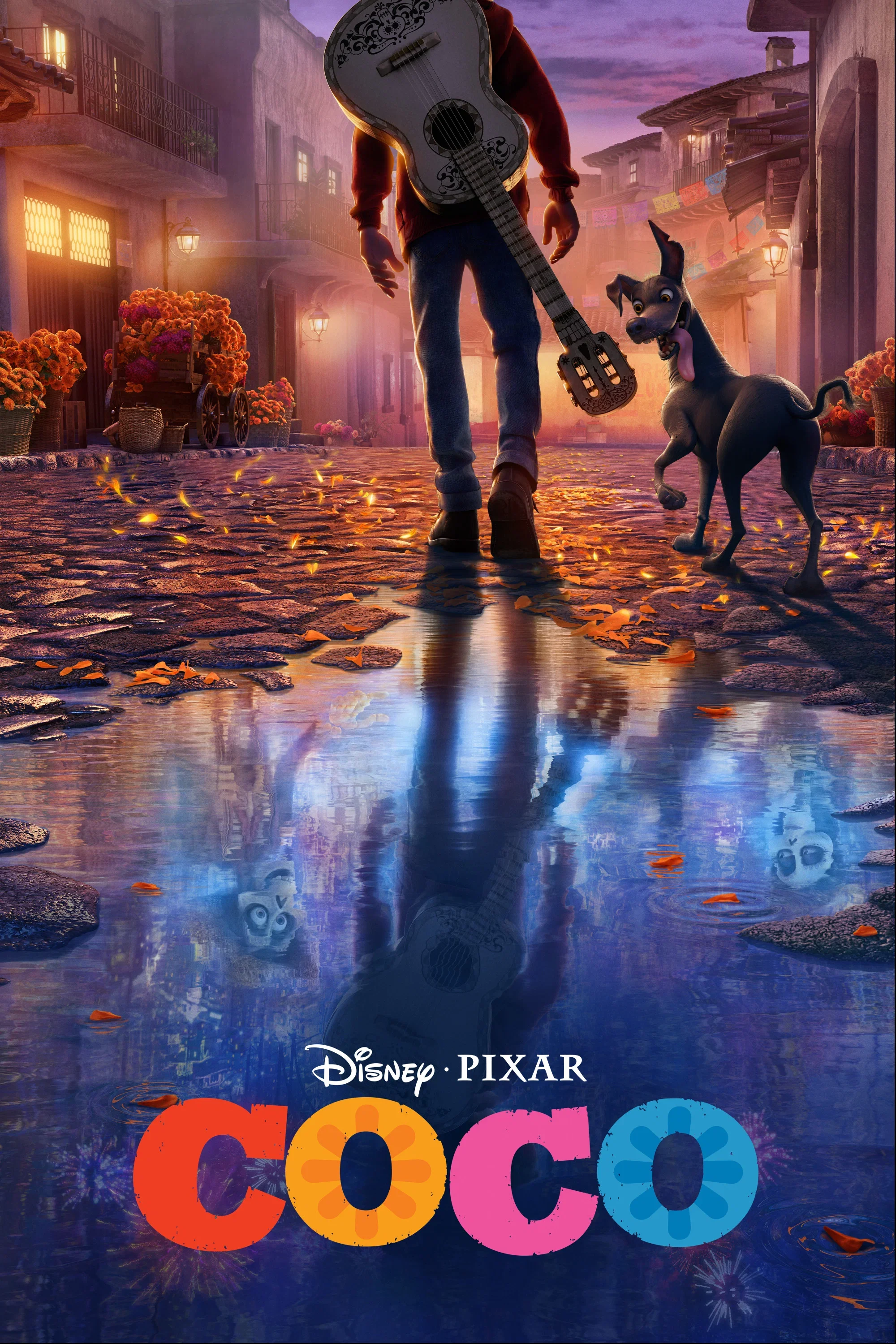
Pixar’s Coco is sweet, charming, and beautiful, both in its sentiment and its visuals. The story of a young Mexican boy, Miguel, who aspires to one day be a musician, like his legendary idol, the late Ernesto de la Cruz, is an eternal story of following one’s dream. But then, when meeting Señor de la Cruz while lost in the Land of the Dead, Miguel finds that the Vicente Fernández-esque singer is not all that he seems. Miguel, in turn, learns a cautionary lesson on the worshipping of false idols, especially when it comes at the expense of family.
We’ve seen these themes from Pixar before - Up (#184) springs to mind - but Up wasn’t this gorgeous. To achieve its visual splendor, Coco mines the imagery of Mexico’s Día de los Muertos, from its colorful regalia to its darkly beautiful personifications of death.
Despite this beauty, Coco is never overwhelmed. At its core, it remains a simple story of a boy learning to follow his dreams while also honoring his family, both the living and the dead (but never forgotten).
Now, how you feel about Coco’s familiar themes and its capitalization of Mexican culture is up to you. For what it’s worth, you’ll find a wealth of Hispanic surnames in the film’s closing credits, including in their “Cultural Advisors” section. There is also a “Thank You to the Cultural Heritage Locations, Towns & Regions That Inspired Us” section.
Maybe this is just simple lip service on Disney’s part, you know, the least they could do as they watched Coco rake in nearly $1 billion at the box office (it would be nice if some of this money could make its way to those “cultural heritage locations” that served as inspiration, but I digress). At the very least, in recent years, Disney has shown some decorum in its appropriation of “other” cultures in their films, a far cry from yesteryear, with their depictions of monosyllabic Native Americans in Peter Pan, for example, or their deployment of minstrel show crows in Dumbo.
I think there is fair criticism to be made concerning Disney’s exploitation of Mexican heritage, but my purpose here is not to knock Coco for some cultural hijacking (after all, this is Hollywood, an empire that was built on exploitation, of culture and gender and class). No, instead my message is that Coco should be celebrated for its beauty and its messaging to young viewers, latinos and non-latinos alike: Dreams should be kept alive, and so should the memories of family members who have passed on.