#316: Wanda
Release Date: February 28th, 1970
Format: Streaming (HBO)
Written by: Barbara Loden
Directed by: Barbara Loden
4 Stars
“I don’t have anything. I never did have anything, never will have anything.”
“...if you don’t have anything, you’re nothing. May as well be dead. You’re not even a citizen of the United States.”
“I guess I’m dead then.”
This exchange occurs right in the middle of writer/director Barbara Loden’s one and only film, Wanda. Loden died in 1980 at the age of 48 from breast cancer. Before her death, her life was marked by a neglectful childhood, identity-issues and depression as an adult, and a career ahead of its time; the idea of a woman wanting to direct her own script was a non-starter for 1960s film financiers, even if she was married to Elia Kazan.
It’s tragic that she wasn’t given the opportunity to make at least a dozen movies.
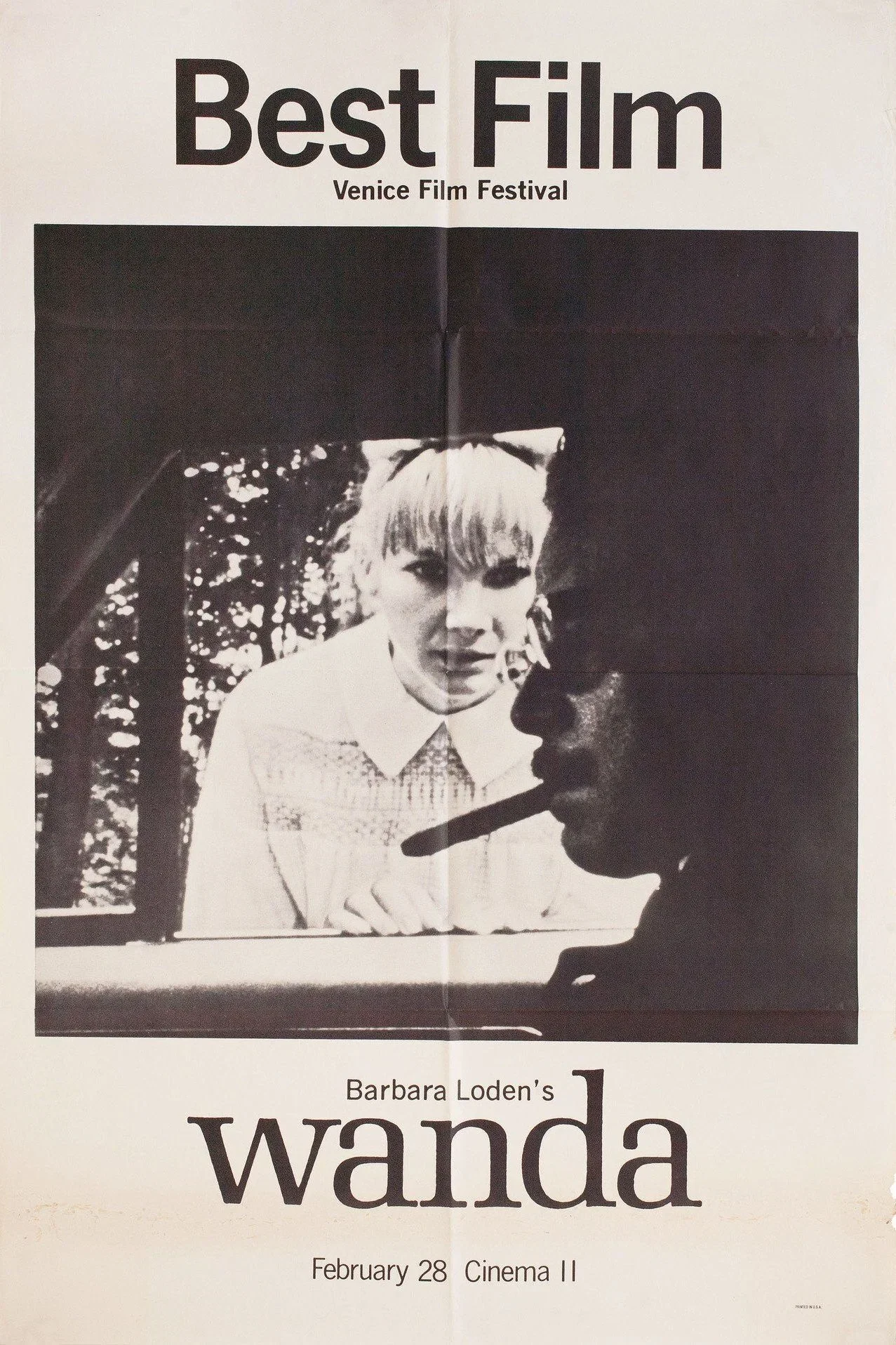
Her artistic voice is so sadly rich in Wanda. Shot around Scranton, Pennsylvania coal country on a budget of just over $100,000, the film is about a woman named Wanda (played by Loden) who walks away from her husband and two young children and spends her evenings out in blue-collar taverns drinking Rolling Rocks, waiting for a guy to invite her to a motel room for the night. One of these men ends up being Norman Dennis (Michael Higgins), a two-bit crook with a mean-streak, who sees the depressive Wanda as the perfect gal to strong-arm into his plan to rob a bank.
Wanda isn’t particularly story-driven, though. Loden is more interested in mood and character work, and she shows herself to be an excellent at it. She shoots Wanda in cinéma vérité style, and utilizes the soot-stained, blighted Pennsylvania landscapes to her full advantage. Her lens shows a world that reflects the inner workings of her protagonist, full of upheaval and not much regard for the future.
Loden doesn’t villainize Wanda, but she doesn’t excuse her behavior, either. She shows us a woman resigned to a certain station in life, who is at the mercy of her surroundings. Maybe there was a time where Wanda felt she was worthy and capable of more, maybe when she met her ex-husband and had children with him, but that Wanda is no longer around.
The Wanda we meet at the beginning of the film is shown sleeping on her sister’s dirty couch. When she wakes up and gets dressed, she walks across a coal mining field and asks a lonely, mentally handicapped worker for a few bucks to borrow. She’ll later lose this money when she goes to a matinee and falls asleep in the theater; her wallet is empty when she awakes.
That is the life of Wanda. Mostly inert and pathetic.
It’s a beautiful portrait by Loden. I imagine much of the character’s inner life is autobiographical, which lends the film a tremendous sadness. As we watch Loden portray Wanda, in a film that she is writing and directing, you can’t help but feel the authenticity of what’s happening on screen.
Thank you, Barbara Loden. You only made one film, but it meant a lot to me.
Postscript: Wanda draws a natural comparison to another downbeat American masterpiece from 1970, Bob Rafelson’s Five Easy Pieces, one of my favorite films. Both films give us unfulfilled protagonists who are adrift. They seem to be symptoms of a diseased America. The important distinctions between Five’s Bobby Dupea and Wanda, though, is obviously gender, but even more importantly, their agency. Writer Carole Eastman characterizes Bobby as angry and personally destructive, yes, but he’s also a brilliant musician with a trust fund available if he ever decides to settle down. As well-rendered as Bobby Dupea is (not to mention Jack Nicholson’s performance, which may be the best of his career), Loden’s Wanda might be the more compelling character: she is not talented, and she is poor. She doesn’t reject the American Dream, like Bobby, for she was never intended to be a part of the dream in the first place. She’s not some spiritual martyr like Bobby Dupea. She’s a woman who never really had a chance, for whatever reason, and what makes Wanda so touching is that Barbara Loden had the insight and care to tell her story with such humanity.