#238: Ishtar
Release Date: May 15th, 1987
Format: Streaming (Tubi)
Written by: Elaine May
Directed by: Elaine May
2 Stars
Elaine May’s Ishtar is as known for its troublesome production as it is for the actual film itself. Personal beefs and power struggles plagued the film’s development from the very beginning, and it seems nobody was immune: Writer/director Elaine May, stars Dustin Hoffman and Warren Beatty, the female lead (and Warren Beatty’s girlfriend at the time) Isabelle Adjani, two different heads of Columbia Pictures, and everybody’s personal agents seemed to have their own visions and desires of what Ishtar should be. Add to that mix a bloated production budget of $51 million (that was back in 1987, mind you) and a 17-week shooting schedule across Moroccan deserts and New York City and it does read like a recipe for disaster.
As for what actually makes it to the screen, the film’s not that bad. It’s not that good either, though. I really liked the opening act, when talentless musicians Chuck (Dustin Hoffman) and Lyle (Warren Beatty) meet cute one night and decide to pool their minimal talents together and form a songwriting duo. After months of bombing on stage around New York, they finally book a gig at a Moroccan hotel for $75 a night.
The scenes of Hoffman and Beatty performing on stage, inexplicably wearing headbands most of the time, are the best part of the movie (songwriter Paul Williams apparently had a ball writing this terrible music).
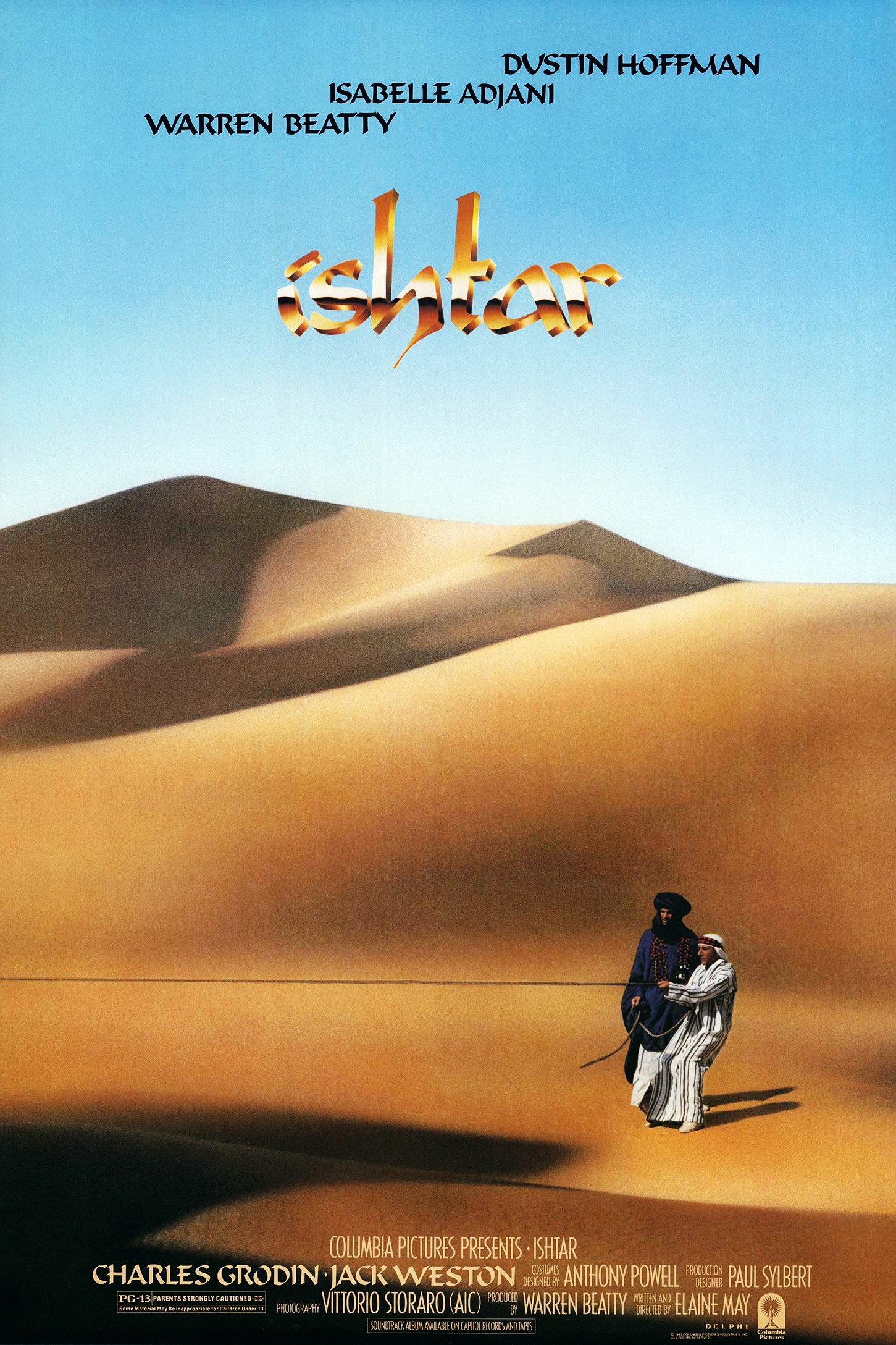
But when the movie gets to Morocco and a Cold War spy plot develops, it all falls flat. There’s a blind camel that’s funny, and a final musical act that made me smirk, but the rest is too directionless and convoluted. It just kind of slogs around, not sure what it wants to do or what it wants to be.
Elaine May, who was unofficially blacklisted from ever directing another Hollywood movie after Ishtar’s failure (unfairly I might add), reportedly shot 108 hours of footage for Ishtar, an astonishing amount for a buddy comedy. It reminded me a bit of Chaplin, who took months, if not years, shooting his comedies and finding the heart of the story and the comedic beats as he went along. The difference between May and Chaplin, though, are obvious: Chaplin was spending his own money on his productions, for which he served as producer, writer, director, and star. Chaplin was the man on his productions, both literally and figuratively, and Elaine May was a woman beholden to the Hollywood studio system that has no tolerance for losing money, especially if you’re a female and it’s 1987.
How many great Elaine May films did we miss out on due to the insular war that consumed Ishtar? What a mess.