Release Date: October 16th, 2026
Format: DCP (Cinemark at The Pike Outlets in Long Beach, CA)
Directed by: Nathan Fielder and Lance Oppenheim
4 Stars
Who is Elizabeth Holmes?
She is a former Silicon Valley visionary now convicted felon, serving an 11-year federal prison sentence for defrauding investors with Theranos, her start-up company that purported to have proprietary technology that could run a multitude of diagnostic health tests from a single drop of patient blood. The technology never truly existed, and billions of dollars were lost in the company’s fallout.
But who is Elizabeth Holmes?
This is the driving force behind Nathan Fielder’s documentary, You Can See Everything, and over the course of three years of filming he finds some captivating potential explanations.
Is Holmes a compulsive liar? It’s possible. The documentary’s opening scenes show Fielder living with her and her romantic partner Billy Evans (more on him later) in a rented house on a beach in San Diego awaiting her transport to federal prison in 34 days. Fielder and co-director Lance Oppenheim capture some mesmerizing close-ups of Elizabeth testifying to her own innocence, her pale skin and cyan eyes awash in southern California sunlight. After being asked by Nathan if she’s ever lied, even a little white lie, Elizabeth replies, “I don’t think so.” Nathan stares, flummoxed, at this implausible answer.
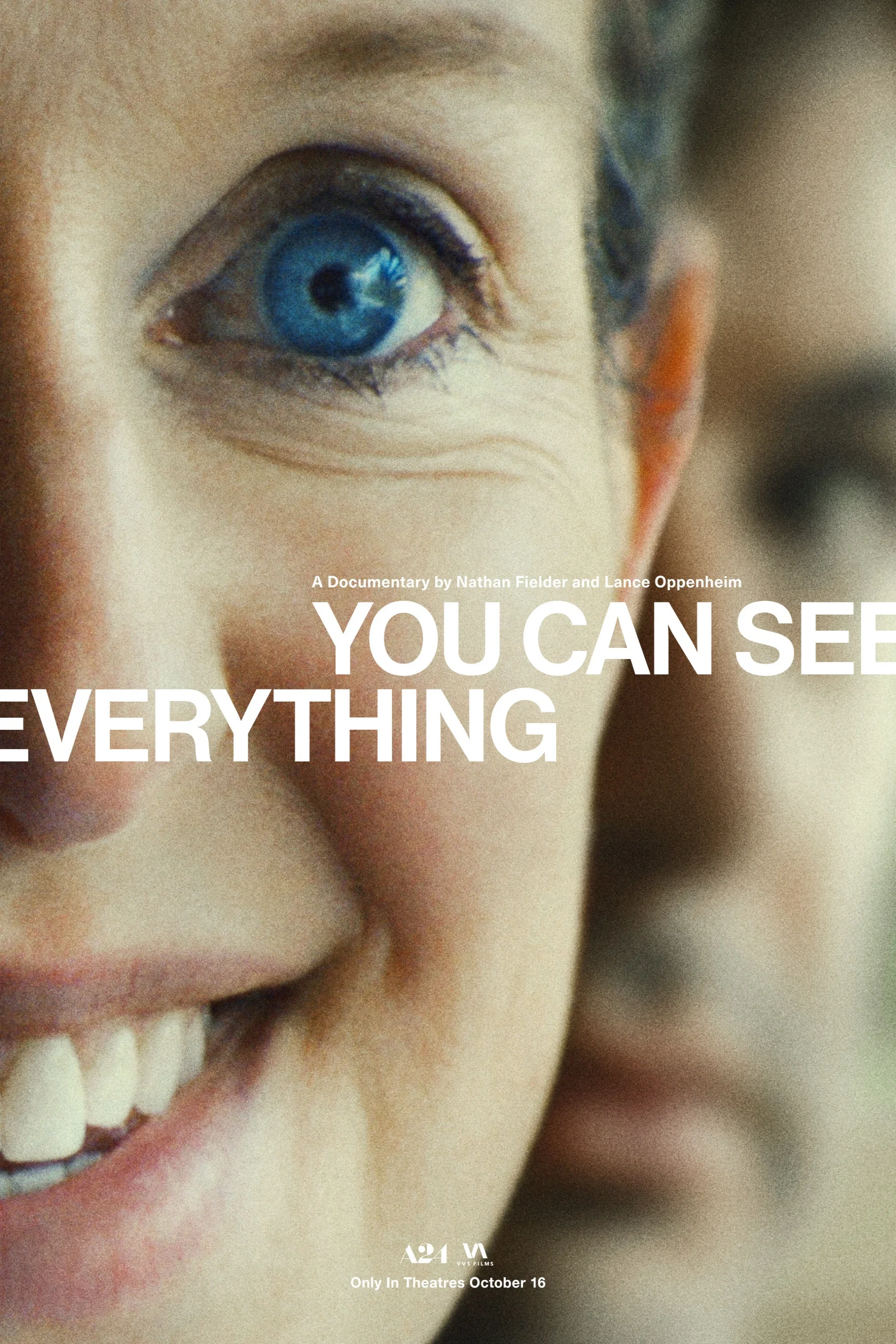
Is it possible that something is wrong with Elizabeth Holmes? Does she truly believe she doesn’t lie? When she told billionaire investors at the height of Theranos’ valuation that her technology “can” run diagnostic tests, did she mean it is “capable” of running tests? Does she understand the difference between “can” and “capable”? Nathan plays her Abbott and Costello’s “Who’s on First” routine and asks her if she understands why it’s funny. She says she finds it funny, but she can’t explain the joke. She doesn’t understand the bit. Billy, sitting next to her, explains that Elizabeth is different in this way, and it’s what makes her special. Nathan stares at them both in contemplation.
And what about Billy Evans? 8 years Holmes junior, he’s the rich son of hoteliers and a guiding influence in Elizabeth’s post-Theranos life. Does he hold the key that unlocks the mystery that is Elizabeth Holmes? Her life seems dominated by such powerful, opportunistic men. Her father was a high-ranking executive at Enron (you can’t make this stuff up), and her co-conspirator at Theranos was her romantic partner Sunny Balwani, 19 years her senior, who she later accused of emotional and sexual abuse throughout their relationship. Is Elizabeth first and foremost a trauma survivor, who replicates victim behavior at the behest of abusive men like Bulwani and Evans? We later learn in the documentary that Billy personally profits off of Elizabeth’s public notoriety.
Crucial to You Can See Everything is our protagonist, Nathan Fielder, and his pervasive self-doubt. Is he the right man for this documentary? He wonders this himself. He doesn’t have a background in science or tech, and in the midst of his own romantic breakup, is it possible that he is susceptible to Elizabeth’s charms in much the same way those wealthy male investors were back in the 2010s? If Elizabeth is a liar, he wonders, or an eccentric, or a victim, why is she allowing Nathan such unfettered access to her life? Is he a mark? What do Elizabeth and Billy hope to gain from this documentary?
Nathan an incredible protagonist in the film. He’s diligent to the point of neurotic obsession, and if you know about his career (I’m a fan), You Can See Everything seems to serve as a culmination of his artistic muses. Like Nathan for You, he uses his business background to satirically explore a failed entrepreneurship, in this case Theranos. Like The Rehearsal, he uses meticulous recreations to bear down on language and meaning, in this case seeking out actress Amanda Seyfried to recreate crucial, unfilmmable moments in Elizabeth’s story before and after going to prison.
Nathan seems to blossom during the documentary’s moments of uncomfortability, and suffers neither platitudes nor cliches when his interview subjects attempt to move on from a difficult line of questioning. “What did you mean by that?” or “Why did you say it like that?” are typical clarifications that Nathan demands. He’s clearly interested in the realities that human beings create in their own minds, and fascinated by the language they use to justify their own behaviors, if not their own existence.
Does he find the underlying truth in You Can See Everything? Is he able to answer the question, “Who is Elizabeth Holmes?”
I’m afraid he may have met his match.