#202: My Dinner with Andre
Release Date: October 11th, 1981
Format: Streaming (HBO Max)
Written by: Andre Gregory and Wallace Shawn
Directed by: Louis Malle
4 Stars
My Dinner with Andre understands well that there is rarely a dinner conversation more interesting than the one you overhear in the booth next to you.
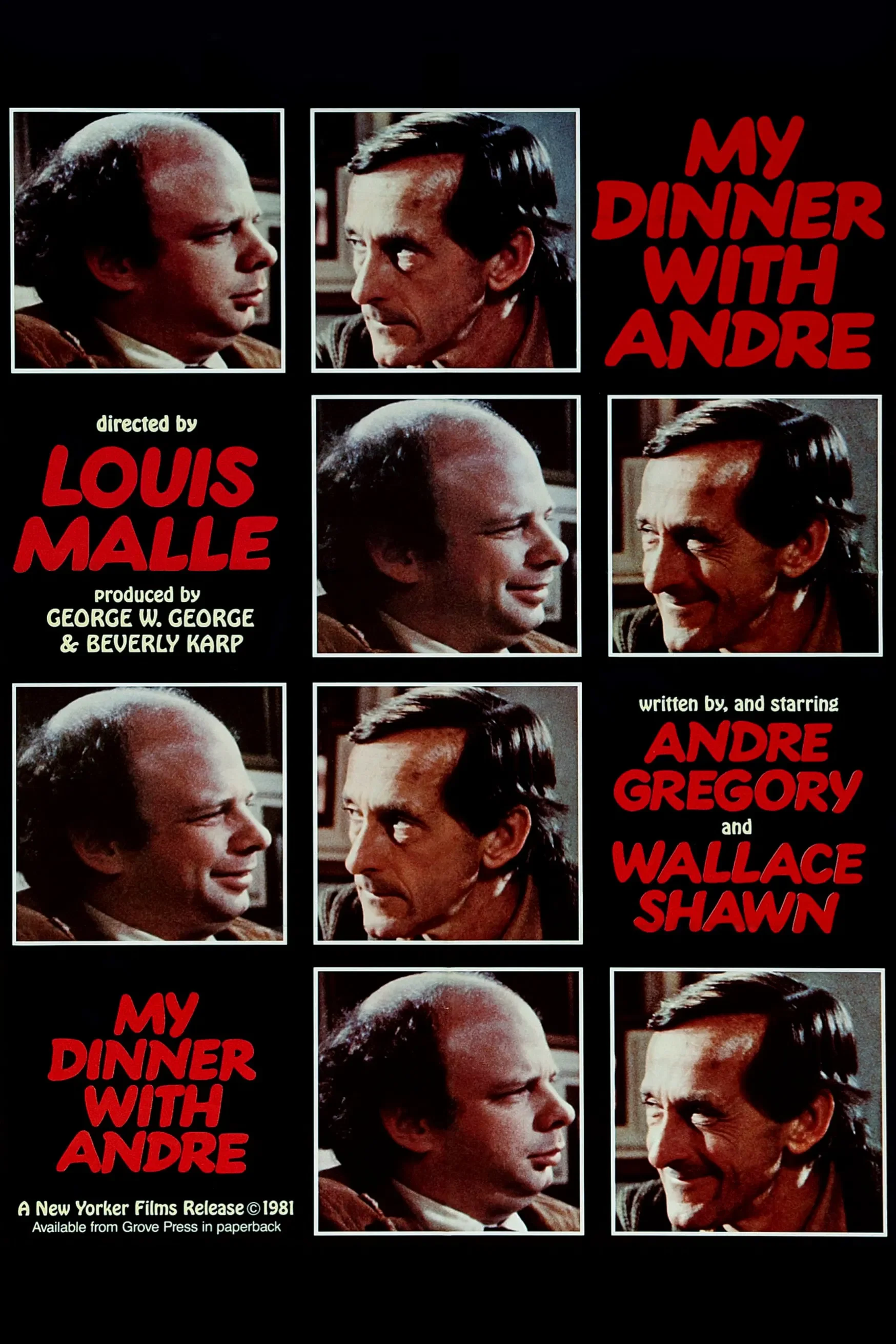
The movie is about two old theater colleagues, Wally (Wallace Shawn) and Andre (Andre Gregory), meeting for dinner at a French restaurant in New York. Wally is a struggling playwright who lives a humble, satisfactory existence with his girlfriend Debbie; Andre is more esoteric, more open to experience, who left the New York theater scene years earlier to travel the world.
Their dinner conversation runs a gamut of topics, from the mundane to the transcendent. Life, death, relationships, sex, social class, race, work, the very nature of existence…it’s a wide-ranging exchange that juxtaposes nicely with the simple visuals of the film, which takes place almost entirely within the restaurant.
Director Louis Malle plays a subtle hand. His compositions are thoughtfully unadorned, with much of the movie taking place in a simple two-shot of the characters at their table.
There are quite a few things that I appreciated about the film, one of them being its surprising lack of ego. This isn’t a movie by the New York art intelligentsia, for the New York art intelligentsia. Yes, the characters exist on the outskirts of that community, but this isn’t a film whose purpose is to flaunt its ideas or to elevate itself above its audience.
And although the characters probe deep and existential topics, they’re not above the human condition. Far from it. Wally is afraid to order off the French menu, so he orders the same entree as Andre. When his roast quail arrives, Wally exclaims, “I didn’t know it would be so small.” As for Andre, who has returned from his travels to Poland, Scotland, and even the Sahara desert, here he is, sitting at a French restaurant, following the same old social norms and adhering to the same decorums that he did before his search for true existence.
Does it matter that he was able to temporarily escape the, as he describes them, dangerous comforts of routine and find real, raw (but fleeting) existence while traveling abroad? Does it matter that Wally finds deep happiness in the very type of routine that Andre fled from? That he loves completing errands during the day and reading books in his apartment with his girlfriend in the evening?
The film doesn’t pretend to have convenient answers.
It ends with Wally taking a cab home, each street and storefront eliciting memories from his past. He’s excited to be home and tell his girlfriend about his dinner with Andre.