#228: The Godfather
Release Date: March 24th, 1972
Format: DVD
Written by: Francis Ford Coppola and Mario Puzo
Directed by: Francis Ford Coppola
4 Stars
Frankly, what am I supposed to contribute to the existing discourse concerning Francis Ford Coppola’s The Godfather? For over fifty years it has been analyzed and lauded by fans and critics worldwide. You know it’s great, I know it’s great.
I suppose I’ll just mention a couple things I appreciated in this most recent viewing:
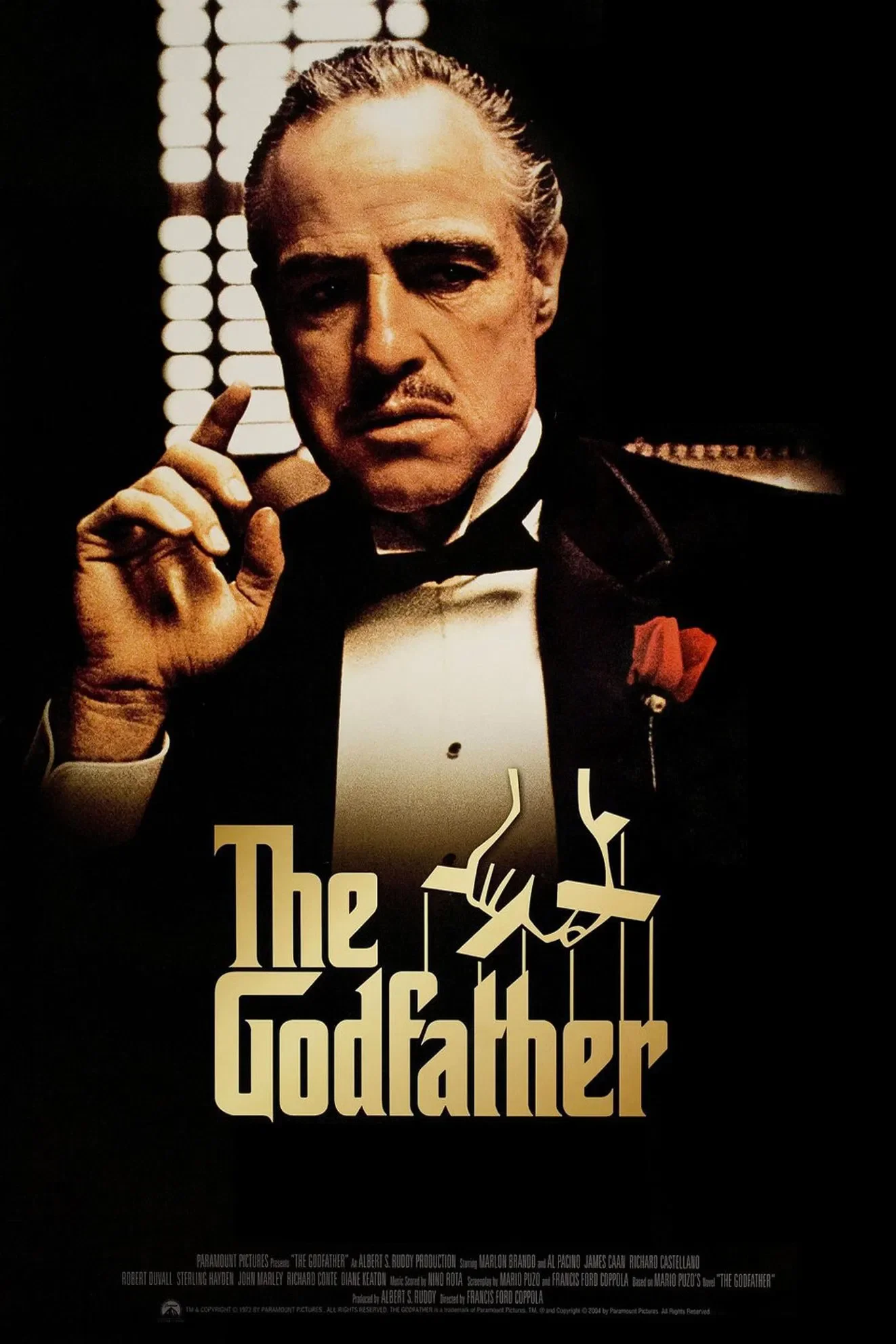
The performances, especially Marlon Brando’s. I know it’s possibly the most iconic performance in film history, but it might still be underrated. A notably temperamental, and at times problematic, performer, Brando is at the height of his powers here. Coppola unlocks him. Brando’s Don Corleone is expressionistic, but never cartoonish. He embodies eternal heroic traits, but he’s unlike anyone you’ve ever seen before. And Brando’s mere presence informs all of the other iconic performances in the film. I mean, talk about art imitating life. Is it Don Corleone, or is it Marlon Brando, lording over these brilliant supporting characters that are a generation younger than himself? You can imagine a young Al Pacino, or Diane Keaton or James Caan or Robert Duvall or John Cazale, arriving to the set each day and thinking, “I’m about to share a scene with Marlon Brando. Marlon Brando.”
The bookends of the film are perfect. The opening wedding scene is probably the greatest set piece ever. In those 30 minutes, Coppola establishes the themes of family, tradition, power, loyalty, human fragility, religion, and immigration. He also establishes each of the Corleones, including the youngest son Michael (Pacino) and his girlfriend Kay (Keaton). He’s recently returned, triumphantly, from WWII, a true American hero, and is attending the wedding in his military uniform. He looks untroubled, boyish even, his hair lightly tousled. As he sits with Kay, who is not Italian, he narrates to her the ins and outs of the family, who is who and what is what. She’s amused. They are in love, tucked away at their own table, holding hands. Contrast this with the end of the film: Michael has taken over control of the Corleone crime family, and has directed the killings of half a dozen of his most dangerous enemies, including his sister’s (Talia Shire) husband (Gianni Russo), who wasn’t as dangerous as he was disloyal. Kay confronts him in his office. His tousled hair is now hardened with pomade, slicked back with a fine tooth comb. His military uniform has been replaced with a three-piece suit. No longer the boy she thought she once knew, he looks cold. Did you really kill him, Michael? He tells her that she should never ask him about his business, but he’ll answer her just this one time: No, he lies. She’s relieved, if only momentarily. As she leaves the office to make a drink, she glances back over her shoulder to see Michael offering his hand to two gangsters in his office. One of them, Clemenza (Richard Costellano), kisses the hand, saying “Don Corleone.” In a reverse POV shot, we see Kay’s worried reaction, then the office door is shut on her, and us, and the film’s closing credits roll.
It’s an iconic ending to an iconic movie. What else do you want me to say?