Release Date: June 23rd, 1989
Format: Streaming (HBO)
Written by: Sam Hamm and Warren Skaaren
Directed by: Tim Burton
4 Stars
I’ve always sort of self-identified as a casual Tim Burton fan, but I’m not sure that’s true. If I were just a casual fan, then how can I explain my assessment of the first decade of Burton’s filmography as virtually flawless - Pee Wee’s Big Adventure, Beetlejuice (#69), Batman, Edward Scissorhands, Batman Returns, Ed Wood, and Mars Attacks! (#348)?
It’s a brilliant run of films, and they’ve each played an important role in my love for cinema, especially as a young man.
I’m now ready to admit that I’ve let the last two decades of Burton’s career obscure my love for many of his films. I am more than just a casual fan. My apologies, Mr. Burton.
Watching Batman this afternoon, I was struck by Burton’s command over the film. It never feels like he’s losing his grip on things, or unsure of what he wants. Only 30-years-old during production, it’s easy to imagine a scenario where he arrives on these giant Gotham City sets and suddenly can’t see the forest through the trees, so to speak.
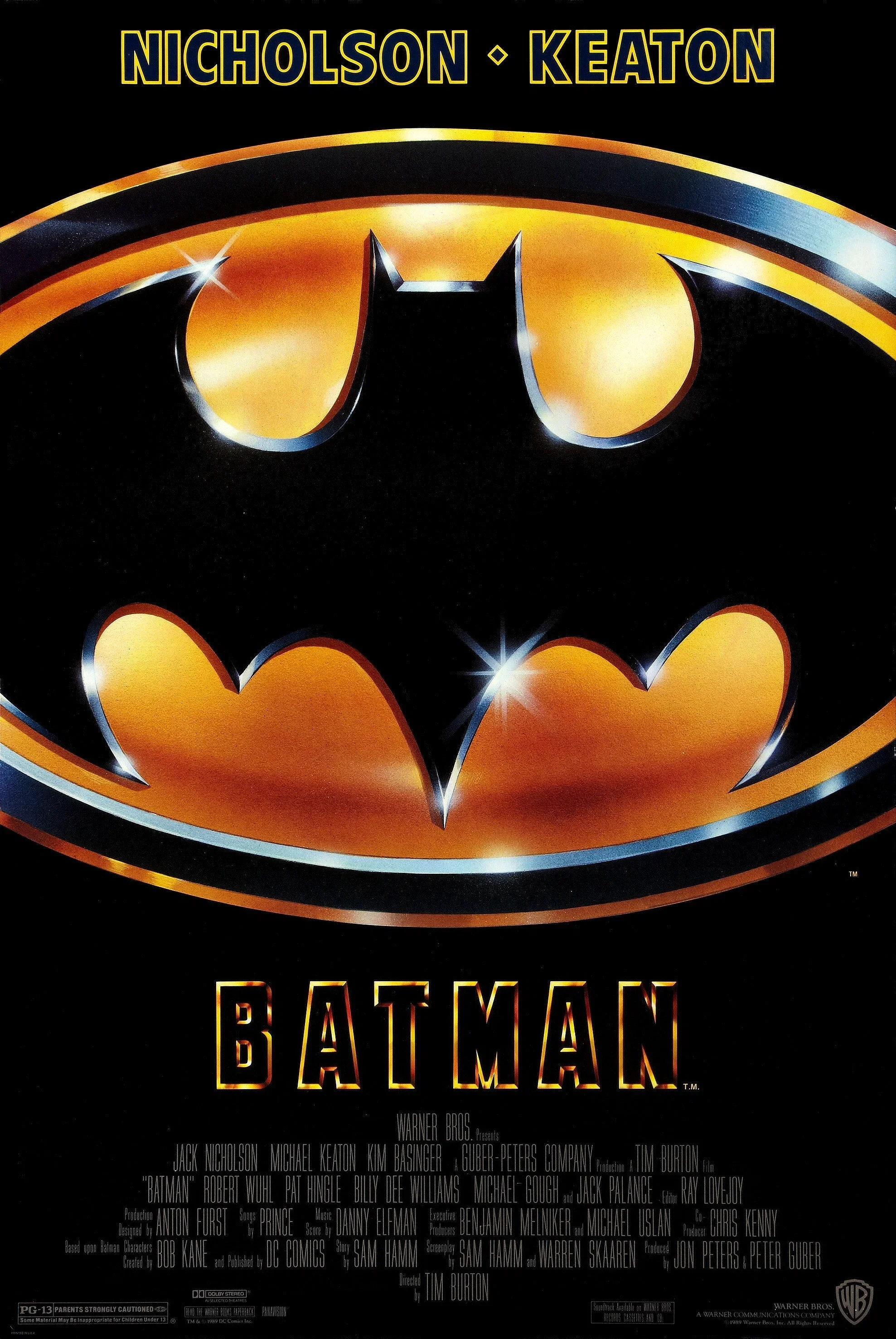
His two previous films, Pee Wee and Beetlejuice, afforded Burton budgets of $7 million and $15 million, respectively, but both were somewhat niche movies for niche audiences. I doubt Warner Bros. put too many financial expectations on the young filmmaker.
But that couldn’t have been the case with Batman, with its $48 million shooting budget and massive global marketing campaign. This was not Pee Wee or Beetlejuice, where Burton could mostly appeal to college kids. Producer Peter Guber gave Burton a blockbuster movie star, a blockbuster budget, and expected a blockbuster in return.
His gamble paid off. Batman is blockbuster filmmaking at its finest.
Back to Burton’s command over the film. It’s sort of incredible how well he’s able to thread the needle between appealing to a large audience while still indulging in his own darker auteurist interests. For example, Batman (Michael Keaton) is decidedly heroic, but still an outsider from polite society (a protagonist staple in Burton films), while The Joker (Jack Nicholson) is played with a combination of crowd-pleasing swagger and genuine malice. Also, the film’s tone is brooding one moment, but genuinely funny the next (this is in direct contrast to the Christopher Nolan-helmed Batman trilogy, which are deathly serious at all times). So whether it’s the film’s characterizations or overall tone, Burton consistently manages to balance a broad appeal with his own gothic-influenced tendencies and biting humor.
Batman proved that Tim Burton was more than just a weirdo filmmaker who made films for weirdo audiences. He was instead a dynamic filmmaker that could carry a blockbuster, and he was about to make the best film of his career, Edward Scissorhands.