Release Date: March 22nd, 2019
Format: Streaming (HBO)
Written by: Jordan Peele
Directed by: Jordan Peele
3.5 Stars
Timing is everything.
When Jordan Peele’s highly anticipated sophomore film, Us, came out in March of 2019, it debuted at #1 at the box office, received a warm critical reception, and went on to earn more than $250 million. It was by any measure an artistic and commercial success.
But then two months later Bong Joon Ho’s Parasite (#56) swept into theaters from across the Pacific. It was a phenomenon, outearning Us at the box office (slightly) through sheer word-of-mouth, and then organically evolved into one of the most improbable Oscars contenders in the award show’s history.
Against all odds this subtitled, genre-bending Korean thriller about class warfare won Best Picture, becoming the first ever foreign language film to take home the big prize. Pull up virtually any critic’s ‘Best of the 21st Century So Far’ list and you’ll undoubtedly find Parasite.
What you won’t find is Us.
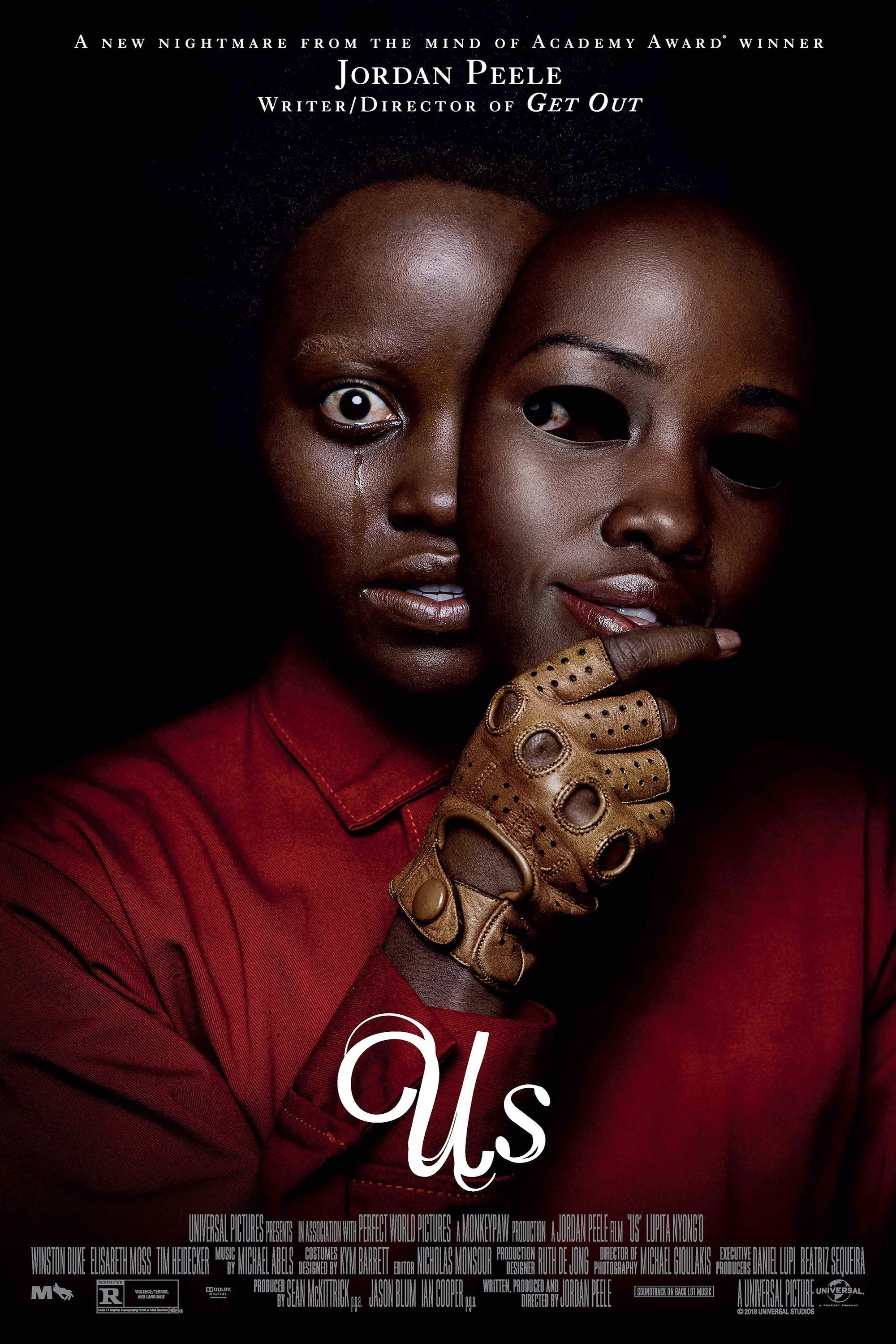
The two films are tonally and thematically linked - creepy allegorical tales about marginalized people being forced to live underground - but watch them together and Us suffers a bit in comparison.
Peele’s film is about the Wilson family - mother Adelaide (Lupita Nyong'o), her husband Gabe (Winston Duke), their teenage daughter Zora, and their young son Jason - roadtripping to Santa Cruz for summer vacation. Like a black Clark Griswold, Gabe is basking in cornball dad glory, but Adelaide is reticent about the trip. This is her first time in Santa Cruz since she was a young child, when she got lost during a power outage in a boardwalk funhouse and inexplicably ran into a doppelganger of herself, dressed identically, smiling maliciously.
Adelaide reveals this to Gabe during their first night at their vacation home, and she tells him that she worries that the doppelganger has been waiting for her return ever since. Gabe is a bit disbelieving but supportive. Even if that did happen, it was a long time ago.
On cue the house’s power goes out and Jason enters the room to tell them that there is a family standing out in their driveway. Adelaide and Gabe go to the front door to take a look: a family of four in red jumpsuits, holding hands, staring inhumanly at the house. When Gabe threatens them with a bat, the jumpsuited doppelgangers turn into the Wilson’s worst nightmare, breaking into the home and attacking the family. Us becomes a tale of horror and survival, with a bed of social commentary underneath.
Who are these doppelgangers, who call themselves “Tethereds”? Where did they come from, and why are they doing this? Peele’s script explains most of it in a couple of large exposition dumps spoken by Adelaide’s Tethered clone, named Red (also played by Nyong’o). While holding the Wilsons hostage in the living room, Red says that they are duplicates created by the government in a failed experiment on population control. Ever since the experiment was shut down, the Tethereds have been abandoned in underground tunnels, stuck in a loop, eating raw rabbit and vaguely mimicking their clone counterparts living up in the real world.
Now they want a real existence on Earth.
The story works, even if Peele doesn’t execute it as successfully as Get Out. I’m sure Peele would argue that those two expository scenes about the Tethereds are crucial to his film, but I more enjoyed what was unsaid in Peele’s script. The Wilsons - especially Gabe - are representative of the all-American family, complete with superficial consumerist attitudes and cliche aspirations for the future. Their life is an unexamined life.
Why was the government’s cloning experiment abandoned? Peele, thankfully, doesn’t explicitly tell us, but maybe it’s because the clones served their purpose, however short-lived. Turns out that controlling American citizens is pretty simple: Create a working-to-middle class that aspires to own a car (or a boat and a vacation property if they’re lucky), give them affordable technology and entertainment to fill the time in their vacuous lives, and let them live out modest, capitalistic dreams.
This wasn’t what the Tethereds were taught, though. In the film’s final shot, Peele shows the Tethereds freed, locked arm-in-arm across the California mountains, literally a Hands Across America. They seem to be seeking a greater, deeper American purpose that was promised decades ago, but abandoned.
In Us you can feel Peele’s love for the horror genre, especially the symbolic sinisterness of films like Kubrick’s The Shining and Cronenberg’s The Brood. It’s probable that Peele is the godfather of resurrecting this type of horror film that has been en vogue the last ten years or so - coinciding with the release of his Get Out - namely high-concept, stylish, allegorical mid-budget thrillers from comedian and comedian-adjacent directors.
It’s a very good film, Us, even if it was overshadowed by the once in a generation hit that was Parasite. Timing is everything.